Supporting Your Child Through Uncertain Times

Parenting is among the most rewarding—and most challenging—role you'll ever fill. There are moments of profound joy and connection when you witness your child learn something new, overcome a fear, or simply exist in the world with curiosity and wonder. These are the moments that fill your heart and remind you why you became a parent.
But there are also the other moments—the ones that push you to your absolute limits. The tantrums that seem to come from nowhere, behavior you don’t know how to manage, battles over bedtime that leave you exhausted and defeated, and the important questions you just don't know how to answer. The greatest fear that lives within the core of every parent is the fear that you are somehow failing your child, that you're not enough, that you're doing it all wrong.
When stress accumulates beyond your capacity to manage it, overwhelming feelings can surface: shame about losing your patience, failure when nothing you try seems to work, despair when you feel isolated and invisible in your struggle. These feelings are part of parenting—they are not evidence that you're inadequate. During times of crisis and uncertainty, though, these feelings can intensify, the pressure compounds and the margin for error feels impossibly thin.
When we feel deeply vulnerable—whether from external circumstances, internal struggles, or both—we instinctively shift into self-preservation mode. Our nervous system activates to protect us. Fear takes over, narrowing our focus to immediate survival and safety. This is biology, not weakness. But here's what's crucial: being scared doesn't mean we have to respond from that place of fear. When we practice taking a pause, fear serves as information, not instruction.
Caring for your child's mental health becomes especially difficult when you're struggling to care for your own. Right now, your children are watching how you navigate uncertainty. Not whether you struggle, but how you move through that struggle. They're observing how you talk about challenges, how you treat yourself and others when things are hard, and how you cope when you don't have all the answers. They're looking to you for reassurance that they'll be protected and safe, even when the world feels uncertain. This doesn't mean you need to have everything figured out or pretend you're not struggling. It means they need to see you managing difficulty with honesty and hope.
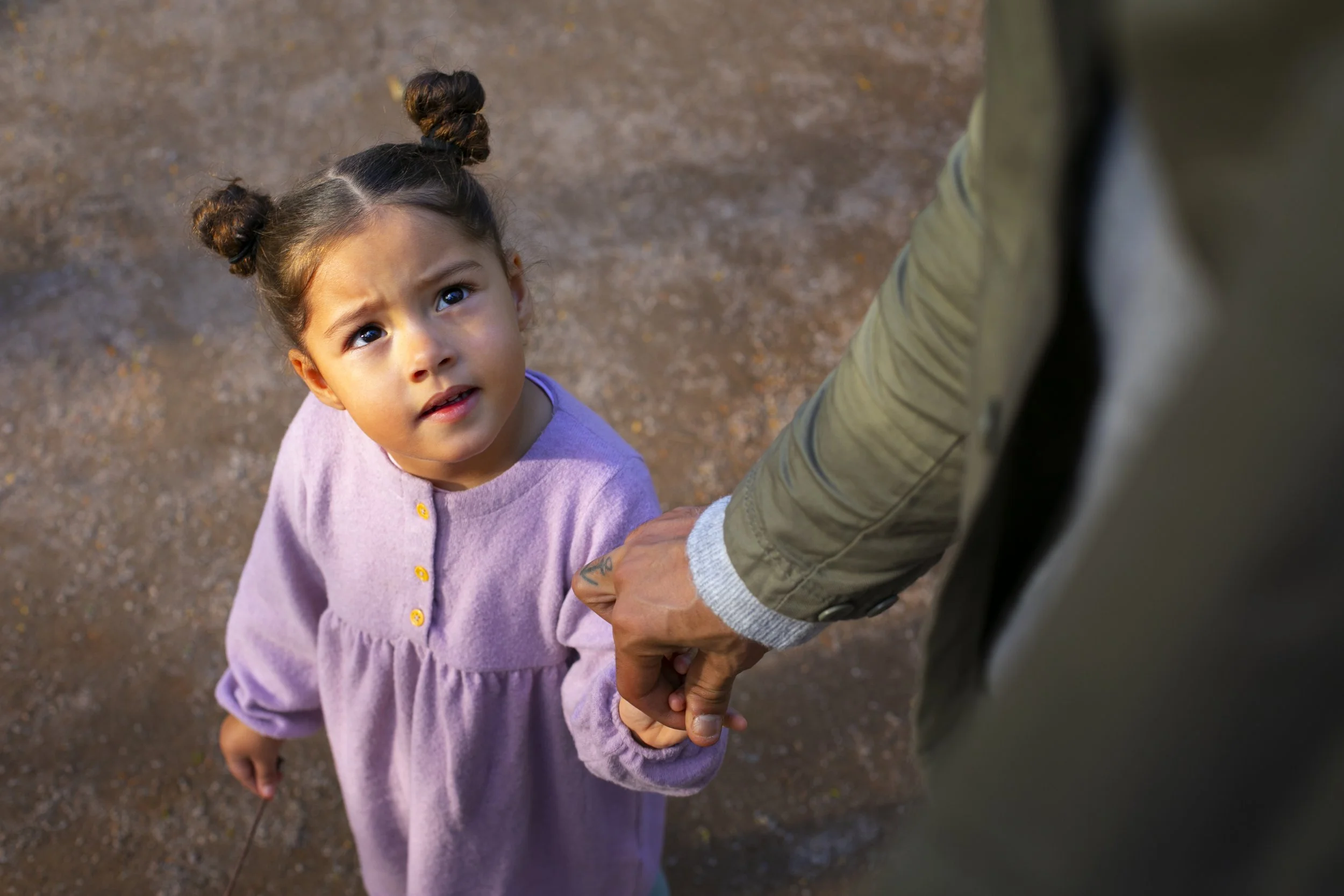
Practical Ways to Support Your Child
When faced with the ambiguity of the world, it’s important to remember that just as you adjust to change, your children are adjusting alongside you, trying to make sense of uncertain times through a lens limited by their age and developmental stage. Here are several strategies to help support your children:
Create Structure and Predictability: Children thrive on routine. A consistent daily schedule—mealtimes, bedtime, regular activities—helps them predict what comes next, providing an anchor of stability when other areas of our life feel unpredictable.
Redirect Them to Something Within Their Control: When your child expresses fear about things beyond their control, gently guide them toward actions they can take that foster a feeling of connection: acts of kindness, healthy habits, ways to help others, small choices they can make each day.
Set Boundaries Around Electronics: Limit exposure to news and social media that are designed to amplify fear and may exacerbate feelings of anxiety or distress. Be intentional about what enters your home.

Get Their Bodies Moving: Movement is medicine for our nervous system. Dance parties, walks, yoga, playground time, or any physical activity helps children discharge stress and increase the feeling of regulation. When the body moves, anxiety has less room to take hold. When children are experiencing big emotions, the simple act of blowing bubbles connects a child to their breath and grounds them in the present.
Open the Door for Conversation: Don't avoid difficult conversations. Just as you want to protect your children from adult matters, it’s important to remember that your children are being exposed to world events though school, peers, and other influences. When you open the door for your children to discuss their worries, you buffer against outside influences and stressors. Help them name their feelings and make sense of what's happening. Your willingness to discuss hard things gives them permission to process their experience.
Help Them Imagine and Connect With Tomorrow: Anxiety and trauma narrow our vision of the future. When your child says, "Things will never be normal again," remind them that difficult seasons don't last forever. Invite them to name what they're still looking forward to — a birthday, a trip, a small ordinary moment. Helping children dream beyond today's challenges is one of the most powerful ways to restore a sense of hope.

The Invisible String Between You
Picture your heart connected to your child's heart by an invisible string—a direct lifeline. What moves through you moves through them. When fear, anger, or panic takes hold, your child feels its current. When you model resilience — tending to your own difficult emotions while meeting your child with empathy, strength, and grace — they absorb that too. This is how resilience is born.
In challenging times, consider the message you want to send — these are the seeds you plant in your child's heart. Show them through your actions that they have the capacity to face difficulty, to adapt, to keep moving forward. Children learn resilience not from what you say, but from watching you do hard things with courage and compassion. Every time you show up — even imperfectly, even struggling — you are teaching.
You don't have to be perfect to be an exceptional parent. What your child remembers is not whether you had it all together, but how you carried the hard moments — with honesty, with hope, and with grace.